
Southeast Asia’s Next Phase: what the NielsenIQ conversation revealed about wine in Vietnam
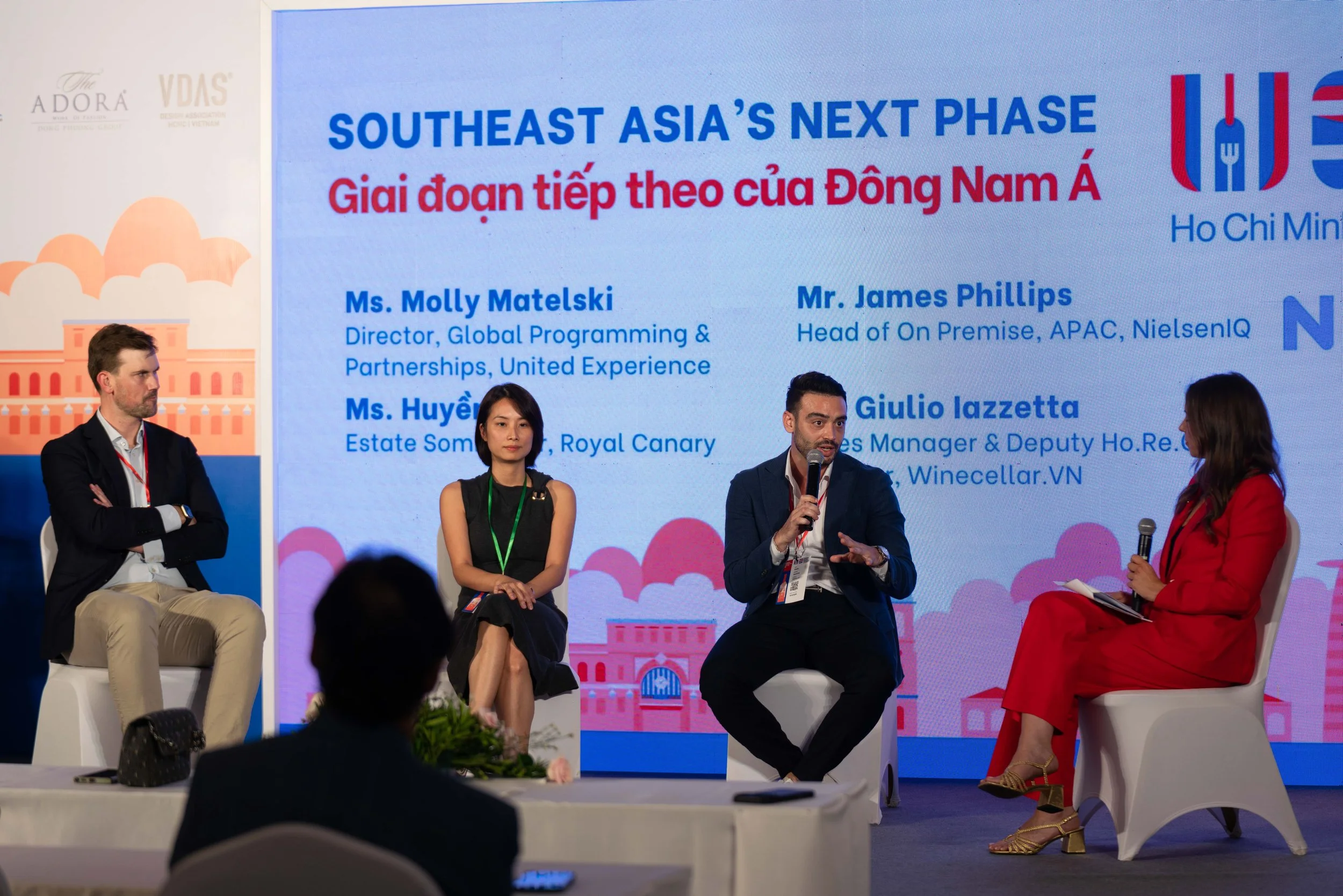
Southeast Asia’s Next Phase involved James Phillips of NielsenIQ, Giulio Iazzetta of WineCellar.vn and Huyền Hà of Royal Canary
At Wines Experience Ho Chi Minh City, the NielsenIQ “Southeast Asia’s Next Phase” state of the industry discussion started from a useful question: which are the trends of the South East Asia wine market? What do people actually order at a restaurant or a bar?
The session brought together data and direct market experience, with contributions from James Phillips of NielsenIQ, Giulio Iazzetta of WineCellar.vn and Huyền Hà of Royal Canary. What emerged was a market that is still small in wine terms, but increasingly curious, selective and willing to spend when the occasion feels right.
Wine remains a minor category compared with beer, yet Vietnamese wine consumers spend more per occasion and dedicate a larger share of their disposable income to hospitality. That makes the opportunity less about mass volume and more about reaching the right audience with the right product and context.
One of the clearest signals was the rise of white wine. Vietnamese consumers are showing stronger interest in white, rosé and sparkling styles, and white wine’s share of total consumption grew significantly between 2023 and 2024. In a warm climate and a market strongly connected to dining, freshness, acidity and versatility at the table are becoming important value cues.
The discussion also showed that Vietnam cannot be treated as a single, uniform market. Hanoi remains closely connected to gifting, especially around Tết. Da Nang is influenced by coastal tourism and hospitality, with stronger demand for white, rosé and sparkling wines. Ho Chi Minh City is broader and more experimental, with space for different styles, prices and occasions.
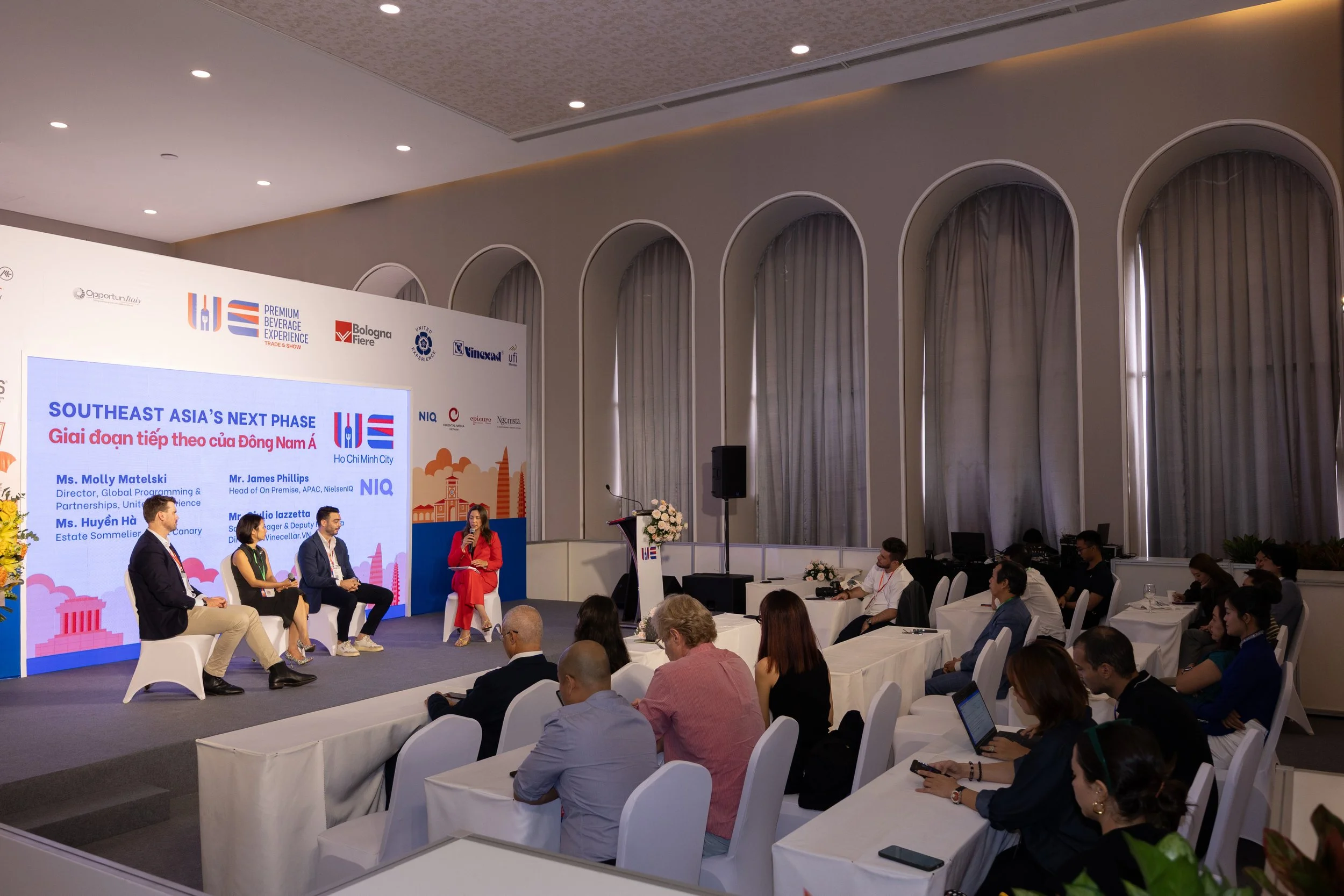
Another important point was how consumers define quality. Heavy bottles and traditional prestige signals still have a role, but they are becoming less decisive. Taste, grape variety, origin and the story behind the wine are gaining more weight. Sommeliers, importers and restaurant teams therefore play an increasingly important part in helping consumers understand unfamiliar wines.
Younger consumers add another layer. They go out often, spend in hospitality and are open to experimentation, but cocktails currently compete strongly for their attention. Wine has to feel more accessible, flexible and connected to modern occasions. Sparkling wines, spritzes and aperitivo-style serves can help by creating an easier entry point without losing identity.
The session closed around three words: vibrancy, digitalisation and sophistication. Together, they describe a market that is moving quickly, learning through new tools and becoming more interested in what sits behind the bottle.
For Wines Experience, this is where the value of the conversation lies. Data can show where the market is moving, but producers still need to understand how those changes translate into real drinking occasions, local preferences and commercial choices. Vietnam’s wine market may still be developing, but its direction is already becoming clearer.
