
The Language of Wine: sharing the memory of food at Wines Experience London
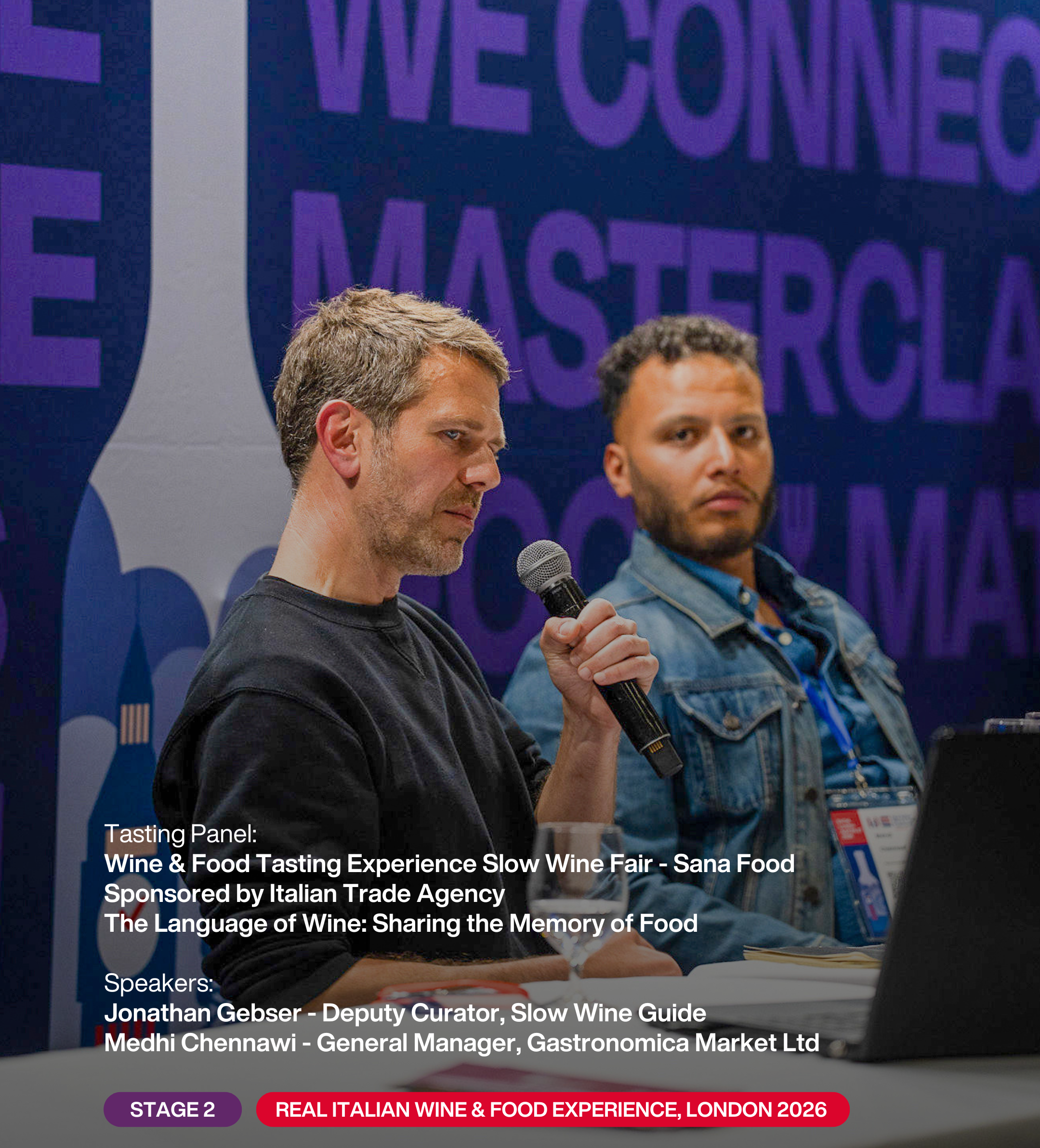
On April 27, Wines Experience London hosted “The Language of Wine: Sharing the Memory of Food,” a masterclass led by Jonathan Gebser, Deputy Curator of the Slow Wine Guide, and Mehdi Chennawi, General Manager of Gastronomica Market. The session was developed around a fairly simple idea: wine is easier to understand when it is tasted with food and discussed in the context in which people actually drink it.
The class began with an introduction to Slow Wine, the wine-focused branch of the Slow Food movement. Its work combines sustainable viticulture, ethical labour, social responsibility and careful winemaking, with particular attention to wines that reflect their place of origin.
Jonathan also explained how that approach has developed through the Slow Wine Guide, the Slow Wine Coalition and the Slow Wine Fair. Together, these projects give producers and professionals a way to discuss wine through farming, territory and production choices, rather than relying only on scores or technical evaluation.
Food memories usually come from repeated habits like a dish often made at home, a local iconic ingredient, a family recipe or a meal shared with other people. Wine belongs naturally in that setting, but professional language can sometimes make it feel more complicated than it needs to be. The session looked at how wine can remain precise and serious while still being accessible, especially for an international audience discovering unfamiliar grapes and regions.
A tasting across different styles of Italian wine
The tasting included eight wines, each presented alongside cured meats and cheeses selected by Gastronomica Market. The lineup covered several regions, production methods and grape varieties, giving participants the chance to compare how each wine behaved with food.
The first wine was Punto Luce 2024 by Prima Luce, made from Trebbiano Toscano in San Gimignano. Trebbiano is often associated with high yields and straightforward wines, while this project works with a north-facing vineyard, limestone soils and a long period of ageing between oak and bottle. The result showed how much the character of a familiar grape can change when the vineyard and production choices are aimed at concentration and precision.
Flò 2024 by Vigna della Cava followed, a rosé made entirely from Montepulciano grown in the Marche. The wine was inspired by the rosés of Provence, but the use of an indigenous grape and fruit from an old organic vineyard kept the style connected to its local background. Its freshness made it especially useful during the pairing, as it worked easily across different textures and levels of saltiness.
The third wine, Marchese Manodori 2024 by Venturini Baldini, was a Reggiano Lambrusco Frizzante made from four Lambrusco varieties. Its fruit, acidity and gentle tannins gave the room a good example of why Lambrusco works so well with food. It has enough structure to support richer flavours, while the bubbles and freshness keep the palate moving.
The tasting then continued with Giorgio 2021 by Tiziano Bellini, made entirely from Ancellotta. The wine was created as a tribute to the producer’s father and involved grape drying followed by ageing in barriques and tonneaux. Compared with the first wines, it was fuller and more concentrated, with black cherry, spice and a firmer texture.
Lenos 2025 by Tenuta Patruno Perniola introduced Primitivo from vineyards planted at 400 metres in Puglia. The altitude and temperature changes between day and night helped retain balance in a grape that can easily become rich and powerful. The wine had the weight expected from Primitivo, but its freshness made it easier to pair with food.
With Arzillo Rosso 2023 by Agricola Arzilla, the style changed again. This Sangiovese from the Marche was made with only two days of skin contact, aged in stainless steel and bottled without fining, filtration or added sulphites. At 12.5% alcohol, it showed a lighter and more immediate side of Sangiovese, with less emphasis on tannin and more on freshness.
Ficaie 2024 by Tenuta Il Quinto, a Morellino di Scansano based on Sangiovese with a small addition of Syrah, came from organically farmed vineyards surrounded by woods, olive groves and uncultivated land. Its restrained use of stainless steel kept the wine focused on fruit and freshness, which made it particularly comfortable at the table.
The final wine was Montepulciano d’Abruzzo Colline Teramane Riserva 2018 by Lidia e Amato. Grown between the influence of the Adriatic Sea and the Gran Sasso massif, then aged for up to two years in oak, it was the most mature and structured wine in the lineup. By that point in the tasting, participants had been able to compare very different approaches to body, tannin, acidity and ageing within the same food setting.
What happened once food entered the tasting
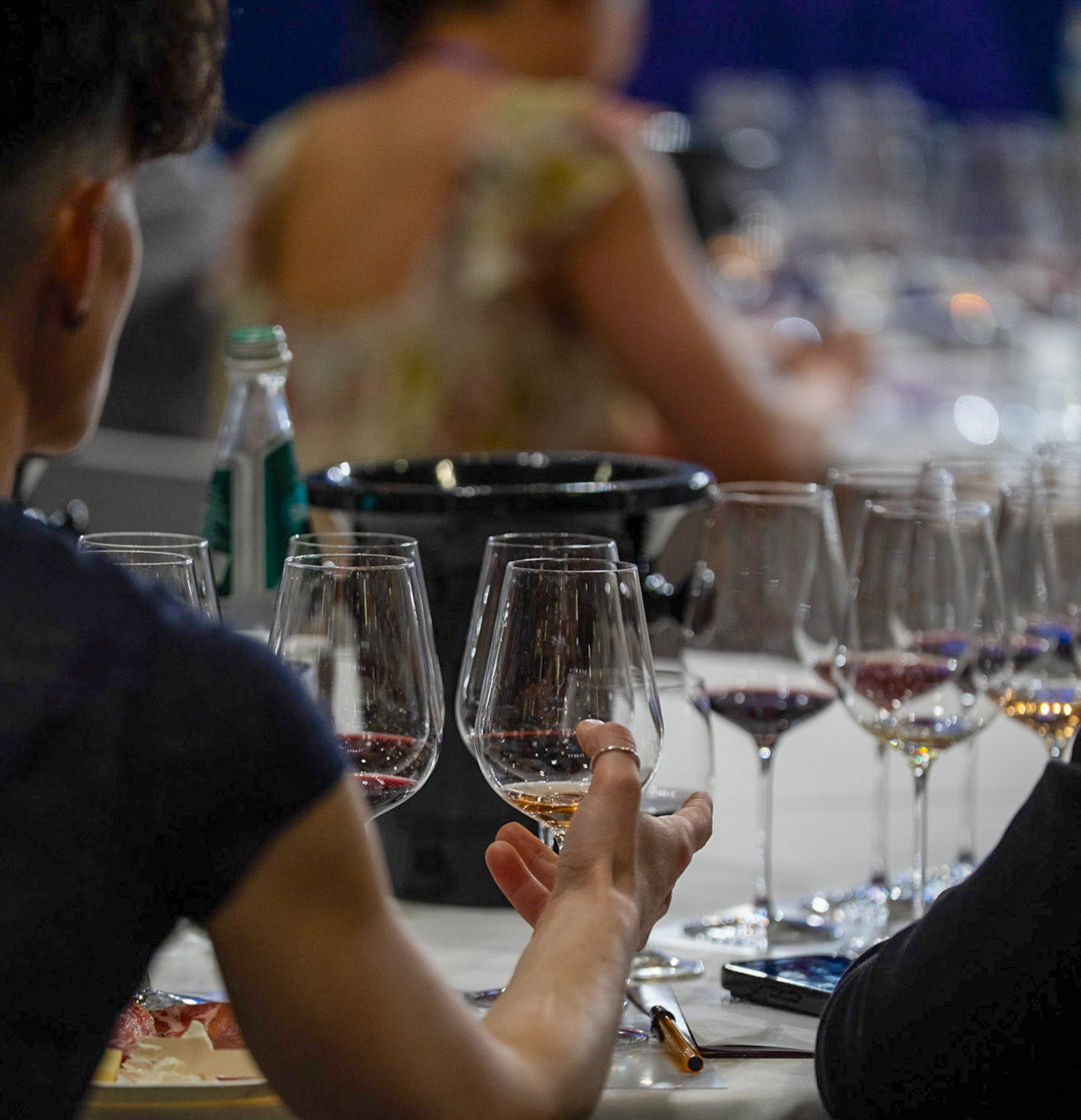
The cured meats and cheeses were an active part of the class, participants tasted the wines before and after the food and discussed what changed.
Some wines felt softer after a bite of cheese. Others became fresher beside cured meat, while salt, fat and texture brought out different parts of the wine. This made the session useful from both a consumer and trade perspective. Pairing advice is often presented through fixed rules, but actual meals are more varied. Different dishes change the way a wine is perceived, and the same bottle can behave very differently depending on what is served next to it.
The role of the sommelier also came through clearly. Technical knowledge matters, but so does the ability to explain why a pairing works in language that feels familiar. For an international audience, that translation can be the difference between hearing a list of facts and understanding how the wine fits into a meal.
Why we wanted this session in London
The masterclass gave participants a practical way to explore Slow Wine’s values through real wines and food. Sustainability, local varieties and responsible production were part of the discussion, but they were connected to taste and use rather than treated as separate topics.
For Wines Experience, that approach fits the way we want people to meet wine. Producers, buyers and professionals need information, but they also need time to taste, ask questions and understand how a product works outside a presentation.
By the end of the session, the wines had been discussed through farming, winemaking, food and personal preference. That gave the group a fuller picture of each bottle and made the conversation more useful for people working with wine in different markets. The strongest takeaway was also the most practical one, wine becomes easier to explain when it is placed back where most people encounter it, alongside food and around a table.
