
Heritage to Horizon
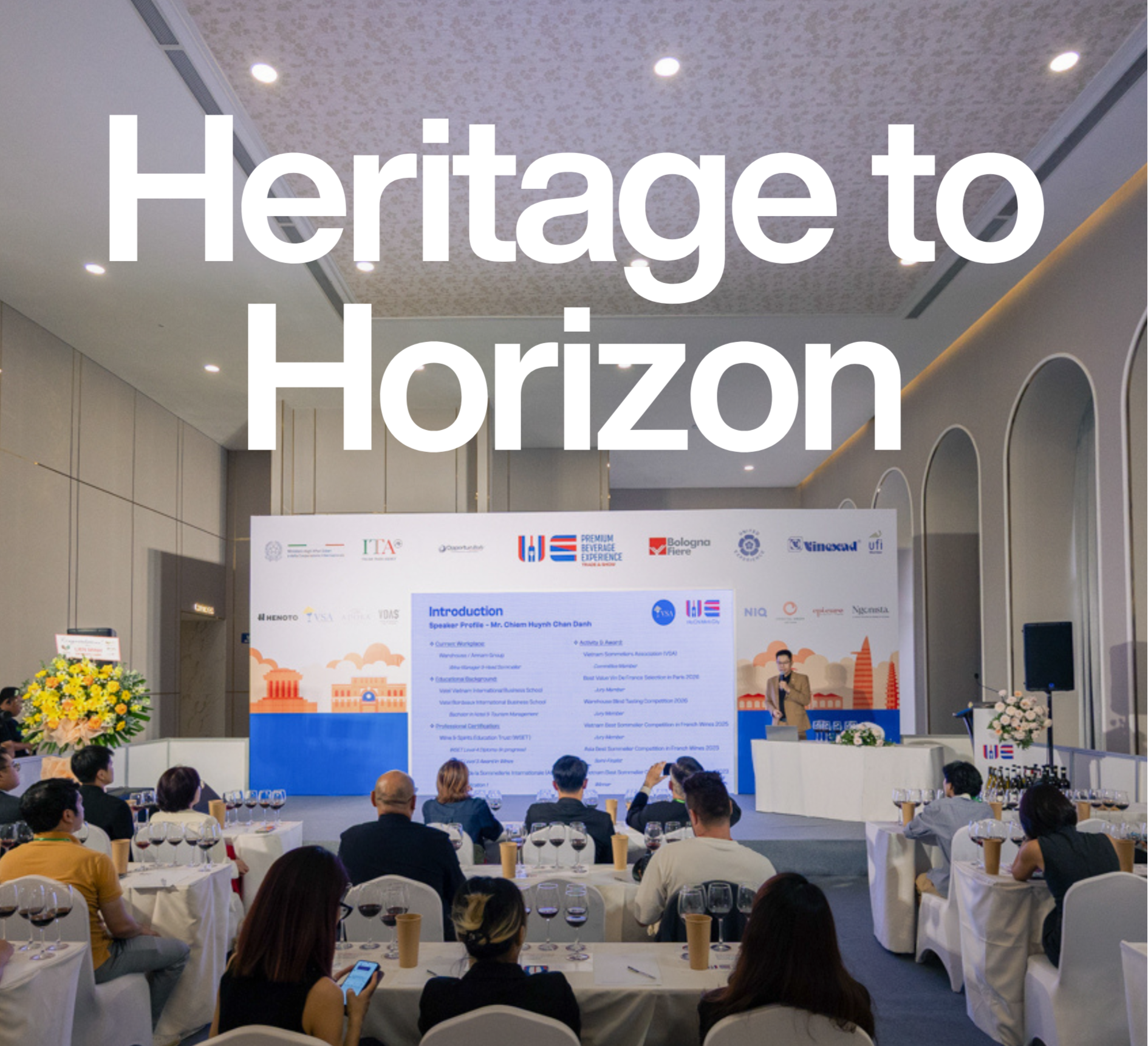
Italy can be difficult to explain through one bottle. Even when we narrow the conversation down to red wine, the differences between regions, grapes and production methods are huge. That what inspired the masterclass “Heritage to Horizon: Italy’s Most Influential and Emerging Regions,” held at Wines Experience Ho Chi Minh City on June 25.
It was led by Chiem Huynh Chan Danh, Wine Manager and Head Sommelier at Warehouse / Annam Group, and used six red wines from six Italian regions to give the audience a wider view of the country. The tasting was divided into two parts: Heritage, with wines from Tuscany, Piemonte and Veneto, and Horizon, which looked at Trentino Alto-Adige, Abruzzo and Campania.
Rather than trying to cover every Italian denomination, Danh worked with a smaller selection and spent time on the things that actually help distinguish one wine from another: grape variety, soils, vinification, ageing and, eventually, where each style can work with food.
Starting with the Horizon
The first half of the tasting moved through three regions with very different approaches to red wine.
From Trentino Alto-Adige, the group tasted J. Hofstätter Meczan Blauburgunder Pinot Nero, a Vigneti delle Dolomiti IGT made from Pinot Nero. The wine comes from clay and limestone soils, with 75% of the bunches destemmed and the remaining 25% fermented whole. Fermentation lasts around ten days with the skins kept submerged. The suggested pairing was intentionally quite light (like appetizers and poultry) which made sense as the starting point of a tasting that would gradually move toward more structured reds.
From there, the tasting moved south to Abruzzo with Talamonti Moda Montepulciano d’Abruzzo DOC. Here the grape was Montepulciano, grown on stony, calcareous soils. After fermentation in stainless steel, the wine spends six months in large French oak barrels before a short period in bottle. Its suggested food range was also broader, including cured meats, poultry, vegetable stews and fresh cheeses.
The third Horizon wine came from Campania: Nifo Sarrapochiello Pontius Aglianico del Taburno Rosso DOCG. Aglianico brought a more structured style into the flight, supported by a longer ageing process. The wine spends approximately 12 to 14 months in barrique, followed by another 12 months between steel and bottle. Mature cheeses and cured meats were suggested alongside it, matching the step up in structure from the previous wines.
Putting these three wines together was interesting because “Horizon” did not mean one particular taste profile. Pinot Nero from the north, Montepulciano from central Italy and Aglianico from Campania showed three completely different possibilities that, for an international audience, is useful because Italian wine often becomes easier to understand once the regions are compared directly between each other.
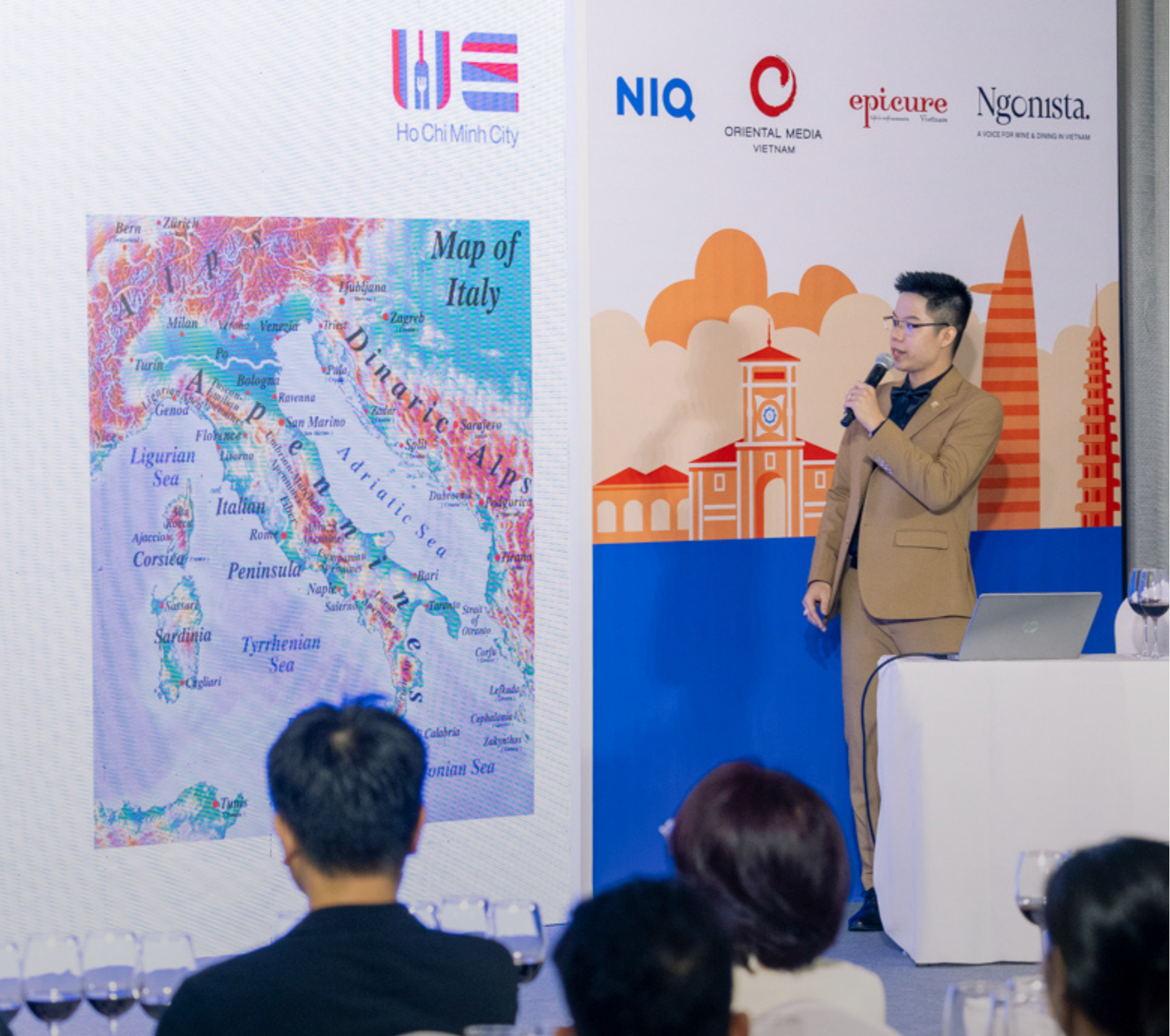
Then came the Heritage side
The second part moved into three regions with some of Italy’s most established red-wine identities, beginning with Tuscany.
Marchesi Frescobaldi Tenuta Perano Chianti Classico DOCG is based on Sangiovese with complementary varieties. The grapes are harvested manually and vinified in temperature-controlled stainless steel before the wine spends 12 months between barrique and stainless steel.
Piemonte followed with Tenuta La Meridiana Rivaia Monferrato Rosso DOC. This was the Nebbiolo of the tasting and also one of the wines with the longest aging process. After destemming, gentle pump-overs and fermentation, the wine eventually spends around three years in barrel.
The final wine was Tenuta Gugi Amarone della Valpolicella Riserva Campo Piano DOCG from Veneto. Made from Corvina, Corvinone, Rondinella and Oseleta, the grapes are harvested manually and naturally dried for 90 days before fermentation. The wine then spends 48 months in French oak and another eight months in bottle. After moving through the other five regions, Amarone provided a very different ending, with a production method and level of concentration that clearly separated it from the rest of the tasting.
Why we decided to compare them this way?
The useful part of the masterclass was having all six wines together one next to each other. Tasting them in sequence makes a huge difference and allows participants to recognize their differences in a much more immediate way.
The winemaking alone showed how wide that range can be. The Hofstätter Pinot Nero used partial whole-bunch fermentation and a relatively short vinification, while the Amarone at the other end of the tasting involved 90 days of grape drying and almost five years between oak and bottle.
For the audience in Vietnam, that comparison also gave some practical context to Italian wine lists. Names such as Chianti Classico or Amarone may already be more familiar, while denominations such as Aglianico del Taburno or Monferrato Rosso can require more explanation. The tasting allowed those wines to sit next to each other, so people could understand the differences through style and structure first, and then connect them back to the region and grape. The six wines gave a manageable way to explore that range, and Danh’s approach kept the session grounded in the details professionals use, that are what the wine is made from, how it is produced, how long it ages and what kind of food can help it make sense on the table.
