
Calabria Next: indigenous grapes, new energy and the future of Southern Italian wine
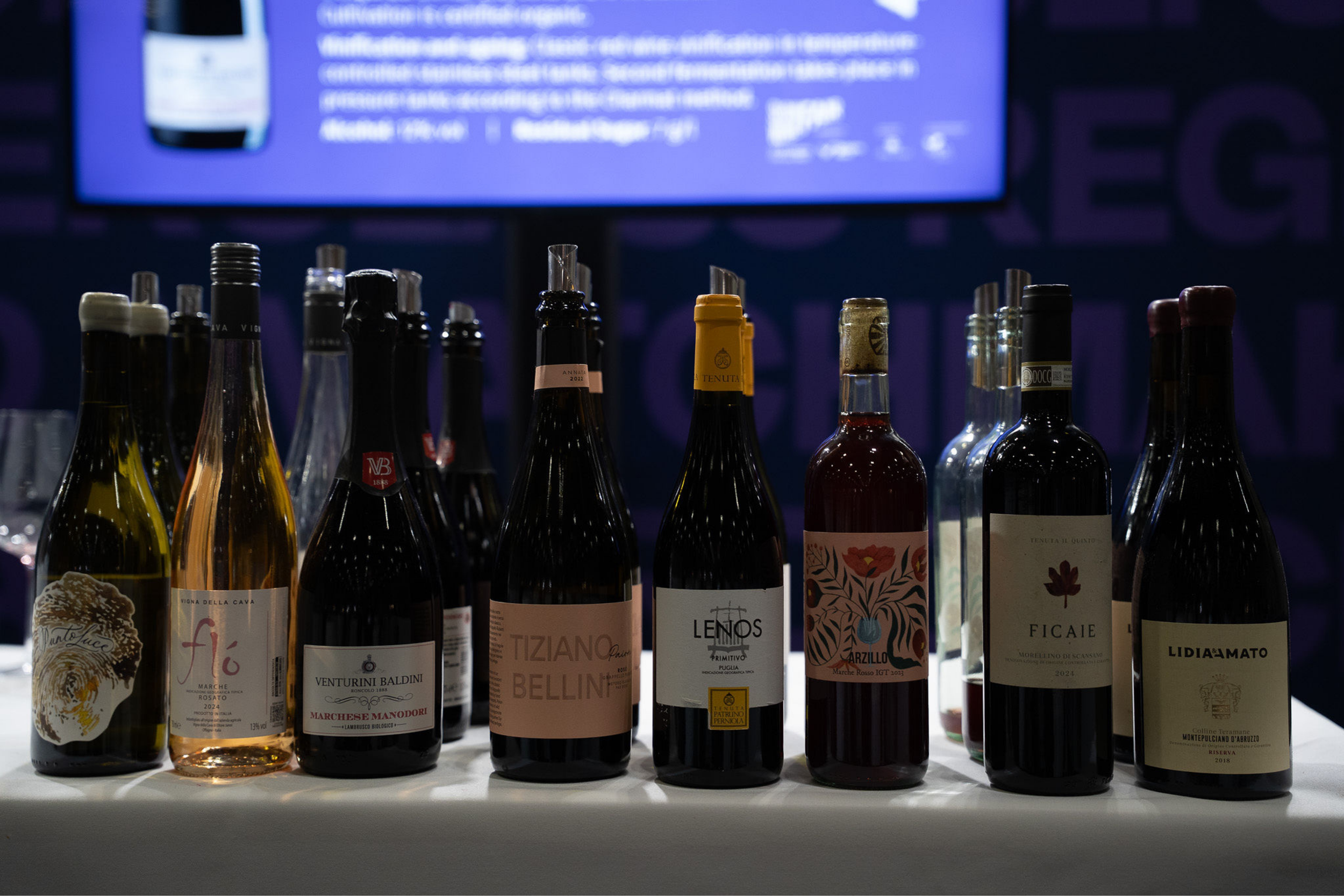
Line of wines showcased during the masterclass held at Real Italian Wine & Food Experience 2026
Calabria has around 12,000 hectares of vineyards, representing about 1.6% of Italy’s vineyard surface, and produces roughly 350,000 hectolitres of wine. Around 70% of that production is red. The region also accounts for about 4% of Italy’s certified organic vineyards, a much larger share than its overall vineyard area would suggest.
Those numbers gave a useful starting point for Calabria Next, the masterclass led in London by Filippo Bartolotta, wine educator, speaker and consultant.
The session looked at Calabria through its native grapes, its vineyard traditions and a group of producers working with very different approaches. Mantonico, Greco Bianco, Pecorello, Magliocco Canino, Gaglioppo, Nerello Calabrese, Greco Nero and other local varieties formed the core of the tasting, giving a broader picture of a region that is still underrepresented internationally compared with its viticultural history.
A very old wine culture
Calabria’s wine history reaches back to Oenotria and Magna Graecia, and the presentation connected that past with some of the vineyard practices that still survive today.
One example was the traditional alberello, one of the oldest vine-training systems in the Mediterranean. In its densest form, vineyards can reach around 10,000 plants per hectare, with almost all work carried out by hand. The system is especially suited to sites where mechanisation is difficult, and the naturally low yields can contribute to concentration and longevity.
That historical background also helps explain the region’s current biodiversity. Calabria has a large number of indigenous varieties and a long tradition of adapting viticulture to very different local conditions, with vineyards spread across hillsides, inland areas and coastal zones.
Three whites with very different personalities
The tasting began with Mantonico Bianco from Statti, in Lamezia Terme. Made from 100% Mantonico Bianco, the wine is fermented at controlled temperature in 30-hectolitre acacia barrels and then remains on the lees in acacia for four months before further bottle ageing.
The second wine came from Cantine Caccamo, in Taurianova. Their Greco Bianco is made from 100% Greco Bianco, grown on clay soils at around 250 metres above sea level. Fermentation takes place in stainless steel, followed by six months on the lees and one month in bottle. The estate was established in 2012 and is now run by the second generation of the Caccamo family.
Parisu from Tenuta Diecimani brought Pecorello into the tasting. The wine comes from the Bivongi area and is made with spontaneous fermentation, no added sulphites and aging in stainless steel. The presentation described citrus, almond and acacia on the nose, with a fresh, saline and persistent palate. Tenuta Diecimani is one of the youngest estates in the group, founded in 2023 by five cousins across three generations.
Those first three wines already showed how wide the white-wine side of Calabria can be. The difference came through both the grape varieties and the cellar choices: acacia for Mantonico, stainless steel and lees ageing for Greco Bianco, spontaneous fermentation and no added sulphites for Pecorello.
Rosé and reds with a strong local identity
The rosé in the flight was Tharsias from Feudo della Sagitta, made from 100% Magliocco Canino in the Terre di Cosenza DOC area. It is vinified in stainless steel and spends three months in bottle before release. Feudo della Sagitta itself is a recent project, established in 2021 in Spezzano Albanese.
The red wines then added another layer to the regional picture.
Akra Rosso, produced in the Terre di Cosenza area, combines Aglianico and Gaglioppo. The wine is made in stainless steel at controlled temperature, with moderate extraction and further maturation in bottle. The style presented here focused on the fruit and the character of the grapes, without heavy oak influence.
Testagna from Cantine Stoli followed a completely different path. It is made from Nerello Calabrese, Greco Nero and other local varieties, fermented in stainless steel and then aged for 24 months in handcrafted ceramic amphorae. Bâtonnage is used during ageing as part of the producer’s sulphite-management approach.
The final regional wine in the presentation came from Cantine Fratelli Lavorata, a family winery established in 1958. Their Bivongi Rosso Riserva combines Greco Nero, Gaglioppo and Calabrese from vineyards on the southern Ionian coast, around 300–350 metres above sea level. The wine spends one year in stainless steel followed by two years in chestnut barrels.
The use of acacia, stainless steel, ceramic amphora and chestnut across the tasting gave a good sense of how varied the winemaking approach is across the region.
Old names, young producers
Another interesting part of the masterclass was the difference in age and scale between the wineries. Statti traces its history back to the eighteenth century, while several estates in the tasting were created only recently. Cantine Caccamo dates to 2012, Cantine Stoli to 2018, Feudo della Sagitta and Tenuta Santa Venere to 2021, and Tenuta Diecimani to 2023. Cantine Fratelli Lavorata sits in between, with a family history going back to 1958.
That mix says quite a lot about where Calabria is today. The grape varieties and vineyard traditions are old, but many of the businesses working with them are still young, small and flexible enough to experiment with different production methods and styles.
The geography also plays a large role. Calabria stretches for around 350 kilometres north to south, and the tasting crossed several areas including Lamezia Terme, Taurianova, Stilo, Spezzano Albanese, Castrovillari, Sant’Ilario dello Ionio and the Bivongi area. The distances between some of these places are significant, and that variation in landscape helps explain the diversity found in the glass.
The session worked well because it showed Calabria as a region with several different directions developing at the same time. There are whites with freshness and salinity, rosés based on local grapes, lighter reds and more structured wines, together with producers using both traditional and less conventional ageing methods.
For the UK trade, that gives Calabria more than one possible route into the market. Some wines can work through their indigenous grapes and regional identity, others through freshness, production method or their ability to offer something different at a given price point. The region is still relatively small in production terms, but the range of styles and grapes gives it more room than its size might suggest.
