
NextGen Sparkling: Can sparkling be the spark?
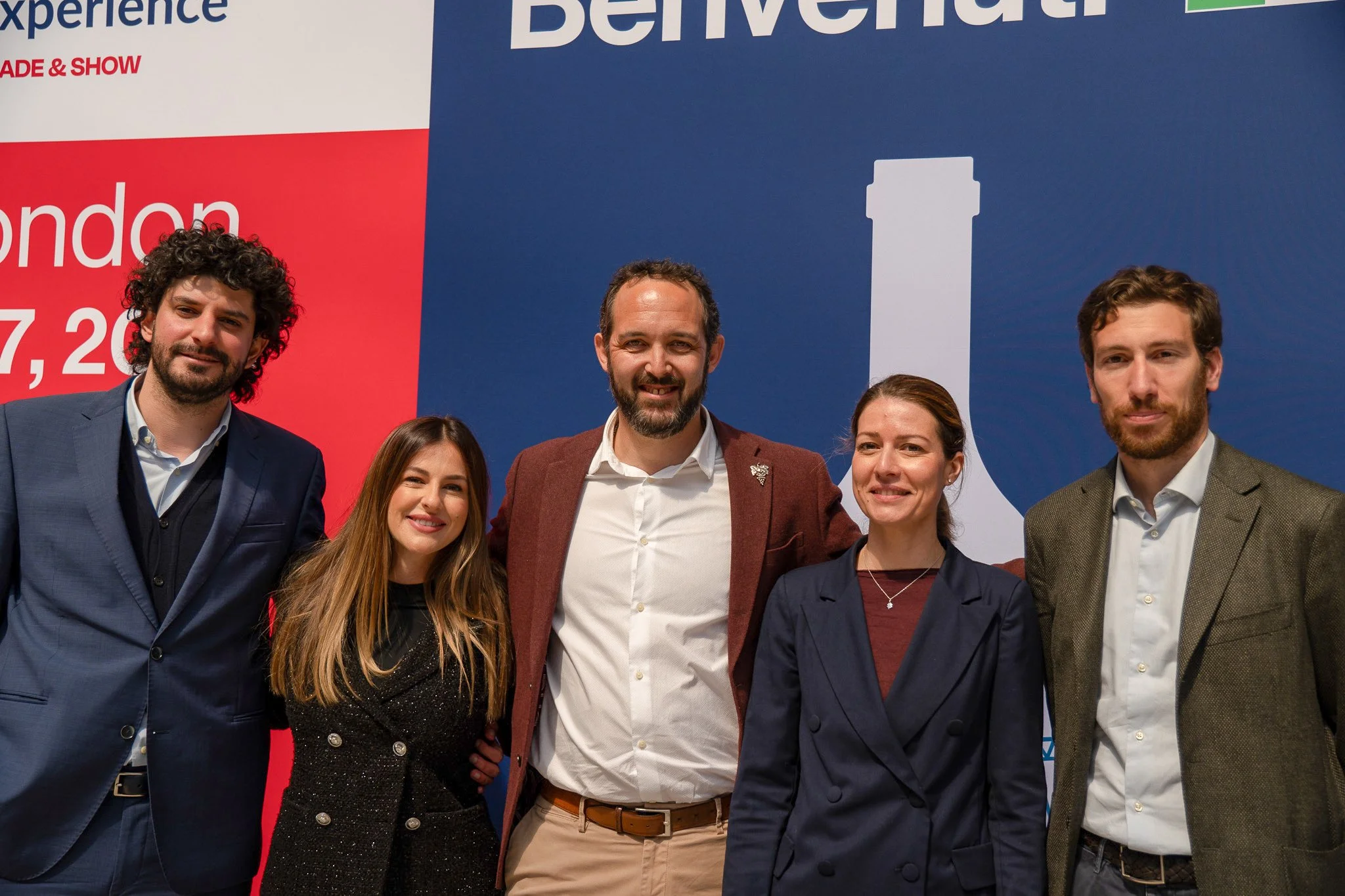
If you skim the wine conversation lately, it tends to circle the same themes: people drinking less, attention is scattered and every category has to work harder to stay part of real life. Sparkling keeps finding a way in, because it turns up at the right time of day, in the right glass and with a clear reason to order.
That’s the logic behind NextGen Sparkling: Can Sparkling be the Spark? We built it around one trade question: can sparkling act as a catalyst for new audiences, new narratives and new ways of thinking about Italian wine?
And yes, the category matters. But the heart of the session was the people: the growers, producers and exporters who are carrying Italian wine forward in their own way, with their own tone and their own appetite for risk.
Dialogue in Motion: a format built for the way this generation works
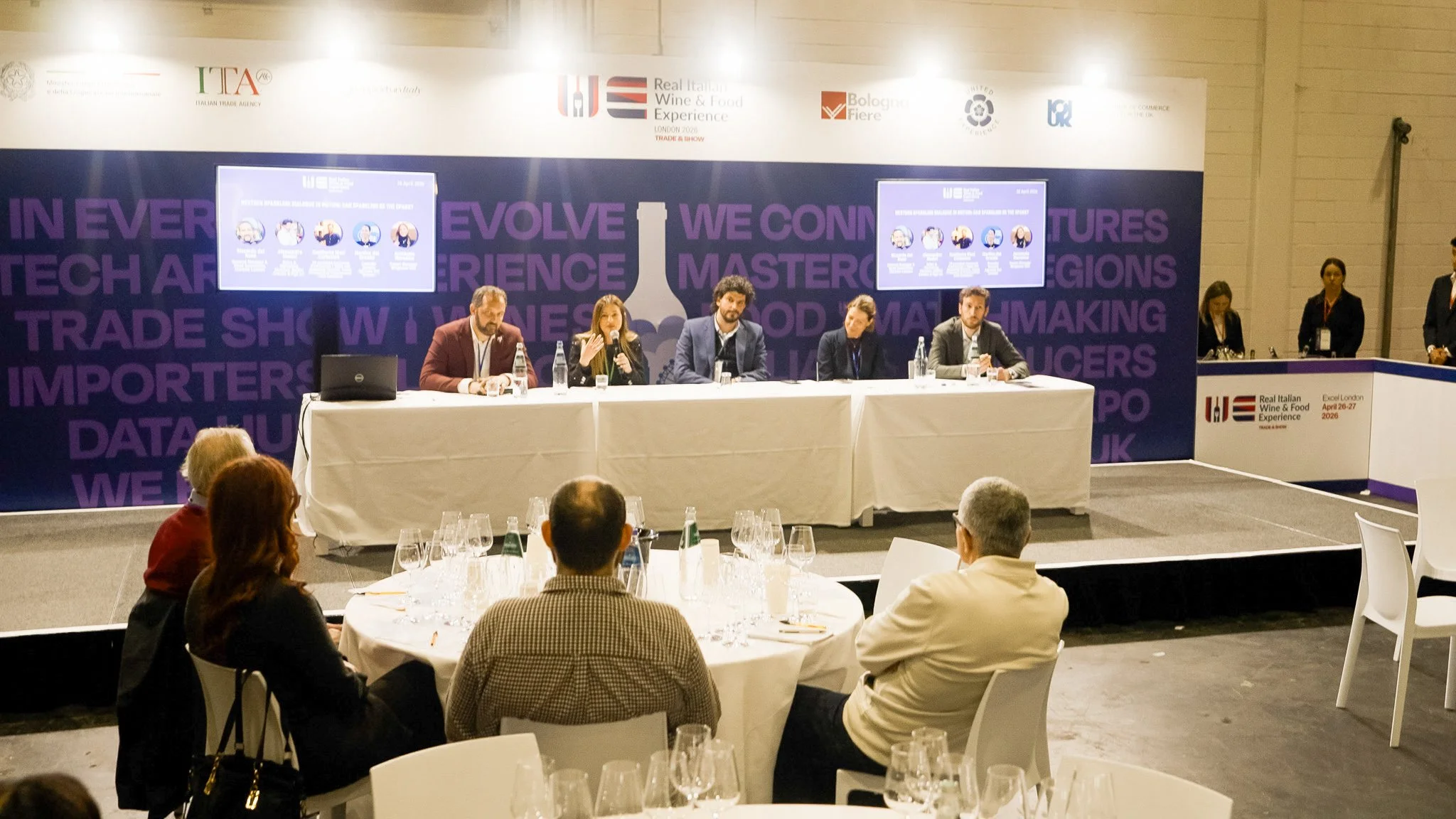
We ran the session as part of Wines Experience’s new Dialogue in Motion rotating-table format. It’s guided, structured and very intentional, yet it feels natural because it mirrors how effective trade conversations happen: you sit, you taste, you ask better questions, you compare ideas and most importantly, you build trust.
It also reflects something that keeps coming up when you talk to next-gen producers, buyers and consumers: they value exchange. They want fewer monologues and more real conversation. NextGen producers are inheriting a legacy, while also reshaping how these wines are communicated and positioned, and they learn fastest when ideas move around the room.
In its recap of the London debut, The Drinks Business shared feedback from the fair with participants describing it as “brave,” “inclusive,” “refreshing,” and “extremely needed for wine right now.” It also framed sparkling as a category with “strong global momentum.”
The producers: four perspectives, one shared direction
To gain a broad understanding of the category and sentiments, each speaker carried a different part of the story, with their personalities shaping the room.
Alessandro Medici (Medici Ermete) came in with the energy of someone who has lived hospitality and knows how quickly perception can change when the context is right. He described Lambrusco as “extremely contemporary,” pointing to what younger drinkers are actively looking for: wines that feel “refreshing,” “affordable,” and “low in alcohol.”
Martina Dal Grande (Società Agricola Dal Grande) brought the grower’s lens, which shifted the conversation back to the ground, of which soil health and regenerative agriculture are very important for the future. She also introduced the most sobering statistic of the session: “Just 8% of Italian farmers are under the age of 40,” with the average farmer in their early 60s. A very powerful reality, NextGen stopped being a marketing label and became what it really is: continuity, agriculture and the practical reality of who will still be in the vineyards ten years from now. While individuals like Martina, member of CEJA (European Council of Young Farmers) are working to provide support for young farmers including education and community, much more must be done to turn this statistic around.
Anastasia Moroaica (Brugnano) spoke from a position many export managers recognise well: building a sparkling identity from within a region that’s already famous for other things. The framework for her breakout was designed around that tension, how you create clarity while you keep the freedom to experiment, and how you bring fresh perspectives while honoring past generations.
Gualberto Ricci Curbastro (Franciacorta / Consorzio) carried the category-building view: how a premium sparkling region balances heritage, technical identity and global positioning without losing its centre. The questions in his breakout moved where the trade conversation usually ends up: what the market understands today, where the gaps still sit and what strengthens global standing over the long run.
By the end, what stayed with us wasn’t a single “winning style.” It was the feeling that sparkling keeps building momentum because it keeps adapting: to new occasions, new formats, evolving customer profiles and new ways of ordering. That adaptability is also showing up in the numbers: IWSR has linked the growth of the spritz/aperitivo occasion to sparkling performance (especially Prosecco), precisely because it shifts sparkling from a one-off celebration choice to a repeatable habit. What makes this “NextGen” conversation worth revisiting is that it never felt like theory. You could hear real vineyard realities, real export constraints, real identity work, and you could see how that translates into trade decisions.
That’s the direction we want to keep following. Over the next weeks we’ll widen the lens to Southeast Asia, where hospitality-led discovery and modern serves are shaping demand in a different way. We’ll explore those market dynamics through dedicated insights developed in collaboration with NielsenIQ, and take the conversation further at Wines Experience Ho Chi Minh City (Premium Beverage Experience Vietnam), 25–26 June.