
When Terroir Speaks Global: Turning Local Identity into International Language
Reading time: 5 min
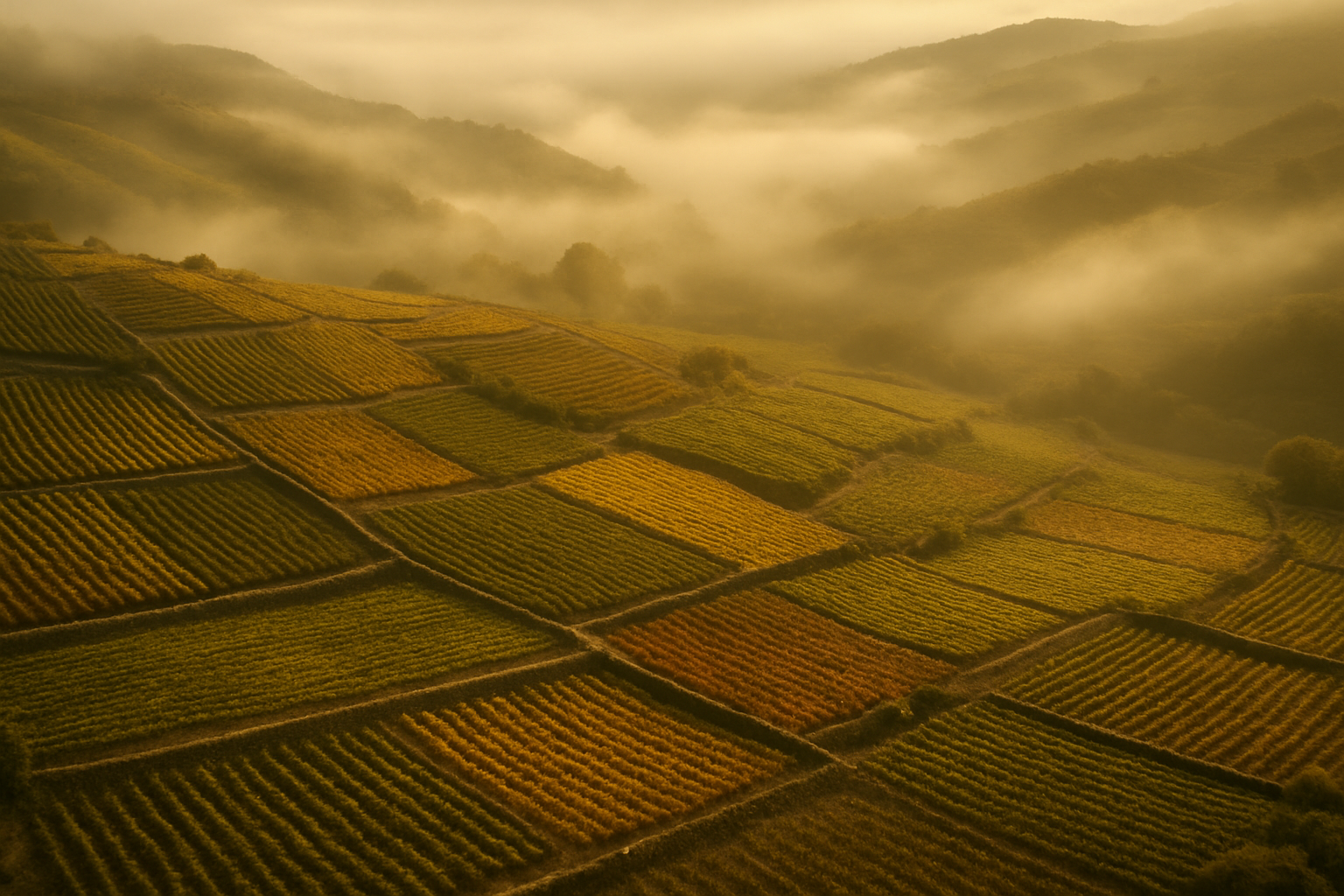
This image has been generated with AI
Terroir was born as a tool not a concept
Long before anyone had any idea about labels, brands, or marketing, wines were known by where they came from. People didn’t ask for a grape variety or a logo, they asked for a place: Burgundy, Chianti, Rioja, Champagne. The land itself was the identity. This is the essence of terroir: not a romantic term, but a practical one. It explains why wine from one hill tastes different from the one next to it, and why these differences became, over time, symbols of credibility and value.
While territory refers to geography, terroir is something more complex. It is the relationship between soil, climate, vine, and human intention.
For producers, terroir remains a powerful idea because it connects authenticity and sustainability, two of today’s strongest marketing values. Wines that express a sense of terroir are perceived as real, rooted in place and time, rather than designed by marketing or manipulated in the cellar. They are also seen as sustainable, because generally they reflect long term respect for the land. This double value continues to make terroir a relevant storytelling tool.
Does Terroir still matters nowadays?
In 2025, terroir also raises new questions. In a globalized world, where knowledge and technology are shared across borders, can a concept so closely tied to geography still hold unique meaning? The answer is yes but only if it’s understood correctly.
Some regions have succeeded in turning their terroir into a collective strength, not just through nature, but through human organization and protection.
Champagne is the most famous case. Its chalky soils and cool climate create naturally high acidity, ideal for sparkling wine. But those same physical traits exist in other parts of the world, from Sussex in England to Trentino in Italy. What makes Champagne unique is not only the land, but the system built around it: centuries of regulation, precise blending methods, long aging, and, above all, a shared commitment among producers. The Comité Champagne manages everything from vineyard boundaries to production methods to global marketing. So even if another region has similar soils and climate, it doesn’t share the same history, collective discipline, or reputation. That’s why only wines made within the defined Champagne area and with the defined Champagne method (Méthode Champenoise) can carry that name.
A Crémant from France or a Franciacorta from Italy can use the same method, reach comparable quality, and share a similar flavor profile. But they belong to different terroirs: different soils, cultures, and traditions. Champagne isn’t “better” by default, it’s simply different, the result of a distinctive ecosystem that includes its people as much as its place.
But Champagne isn’t the only example, Bordeaux, Barolo, and Napa Valley have also achieved international recognition, in very different ways. So one question naturally raise, why are some terroirs famous while others remain unknown? Because fame depends as much on organization and storytelling as on the land itself. The previous mentioned regions built strong institutions to protect and promote their identity. They invested in collective communication, consistent quality, and global education. Their terroirs became not just recognized but understood. Other regions never built that shared narrative. Without unified rules or long term branding, their names stayed local, and their value remained tied to price rather than perception. As a result, some terroirs have come to symbolize quality, often more because of reputation than because of specific objective superiority. Wines from a lesser known terroir can be just as extraordinary as the ones from a celebrated region; what differs is the cultural capital behind it.
Recognition amplifies perception, and perception drives market value. That’s why terroir, when managed strategically, becomes more than soil and climate it becomes identity, memory, and trust.
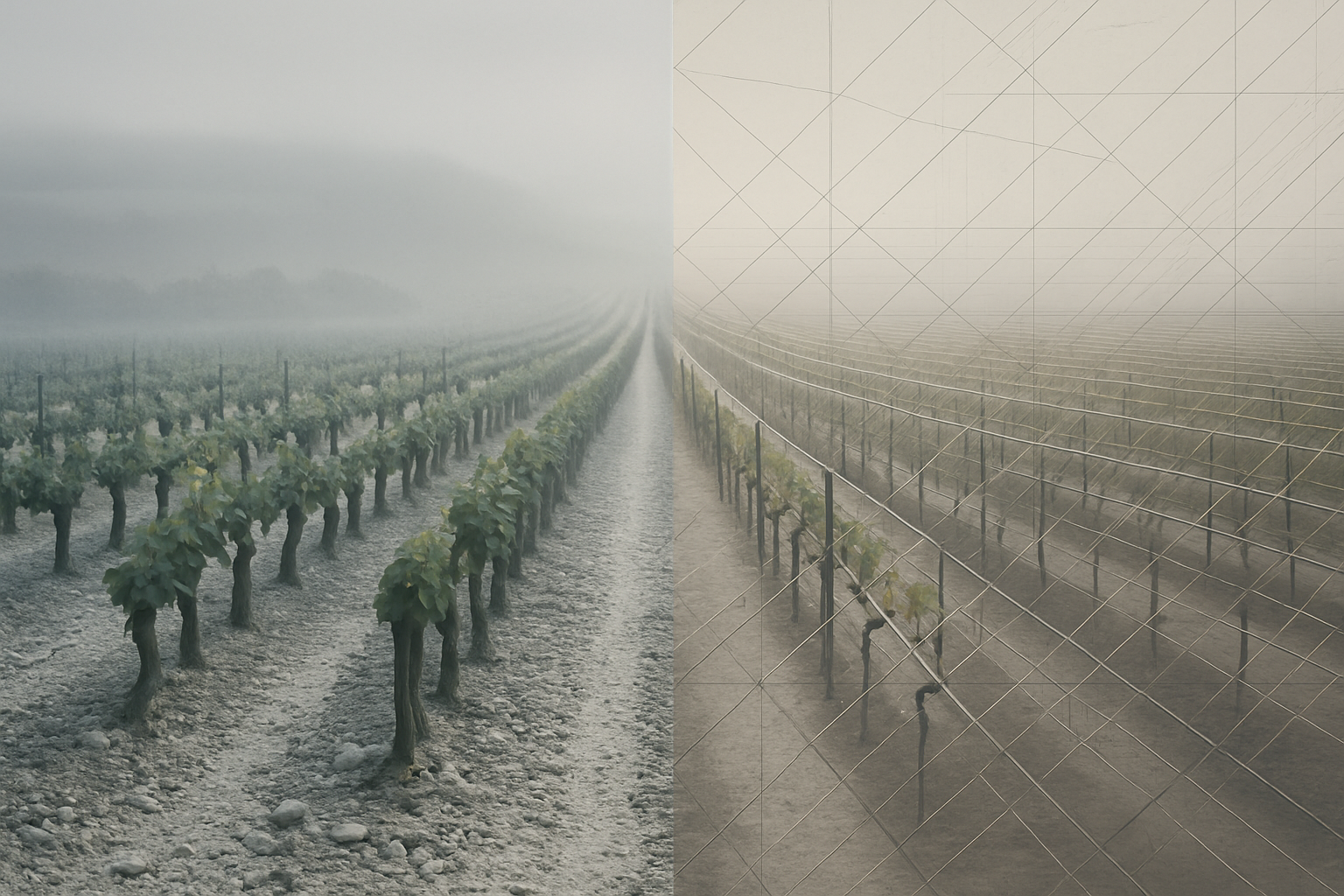
This image has been generated with AI
When its communication should have a different approach
Despite its strength, terroir is not a universal key to communication. “Most casual wine drinkers want something that tastes good, is fairly priced, and looks appealing on the shelf”.[1] For this audience, complex narratives about soil types and vineyard exposition can feel distant or elitist. In those cases, focusing on style, human stories, or sustainability may create a more immediate connection. For instance, rather than explaining limestone composition, a producer can talk about the freshness and tension that limestone gives the wine. These is a form of storytelling that make terroir felt, not just described.
So, does terroir still matter? Absolutely! But not always in the same way. It remains a strategic advantage when:
- The region’s identity is legally protected or historically recognized (e.g., Champagne, Barolo, Rioja).
- The producer belongs to a collective system that ensures quality and coherence.
- The market values authenticity and local origin as signs of craftsmanship.
It becomes less effective when:
- The wine’s audience doesn’t know or care about the region.
- The producer communicates terroir through overly technical or exclusive language.
- The narrative overshadows what truly matters: the wine’s flavor and consistency.
In those cases, other communication levers (innovation, design, sustainability, or emotion) can be more powerful entry points. But that doesn’t mean it should be forgotten. A terroir that isn’t yet famous isn’t less important, it’s simply less understood. And understanding takes time, repetition, and the right tools. Rather than removing it from the conversation, producers can introduce it gradually, using more accessible stories and values as bridges.
Once the audience connects emotionally and intuitively, terroir can emerge as the next layer, the explanation of why that wine feels authentic, consistent, and unique. Education doesn’t start with soil maps, it starts with curiosity. The goal isn’t to simplify terroir out of existence, but to make people ready to hear it.
Bringing terroir back to its purpose
When the idea of terroir was born, it wasn’t meant to be poetic. It was a practical way to explain differences. It was a language of logic, not luxury, a tool used by farmers, not marketers. But somewhere along the way, it started to sound abstract, a word used to impress, rather than to clarify. If we want terroir to matter again, we need to bring it back to its original purpose: to make wine understandable. That means showing how land, grape, and human work interact in practical, tangible ways, how they shape flavor, value, and identity. Used this way, terroir becomes the most honest form of storytelling. It doesn’t decorate a brand; it explains it.
It gives producers a grounded way to communicate authenticity, and it gives consumers an easy way to trust what’s in the glass.
[1] Furrow D., Should we stop talking about terrori?, URL: foodandwineaesthetic.com (06.24.2025)
