
Real Italian Wine & Food Experience
Excel London, 26-27 April 2026
WE break borders
WE build future
Over two days, the event brought together more than 170 wineries and 25 Italian food producers, offering buyers a practical overview of Italy’s wine and food landscape.
The line-up combined leading export-ready groups — including Zonin 1821, Santa Margherita, Banfi, Ferrari F.lli Lunelli, and Gruppo Italiano Vini — with premium estates already active in the UK and smaller producers seeking distribution from regions such as Sicily, Campania, Calabria, Umbria, Emilia-Romagna, Piedmont, and Sardinia.
Curated areas added further depth, from the Slow Wine Coalition to the ICE – Italian Trade Agency collective, highlighting both sustainable producers and key categories for the UK market.
Together, this created a focused line-up that allowed buyers to explore everything from established brands to more niche, terroir-driven selections in a single visit.
+170
exhibitors
40
Italian
food producers
130
wine producers
Moments from the event
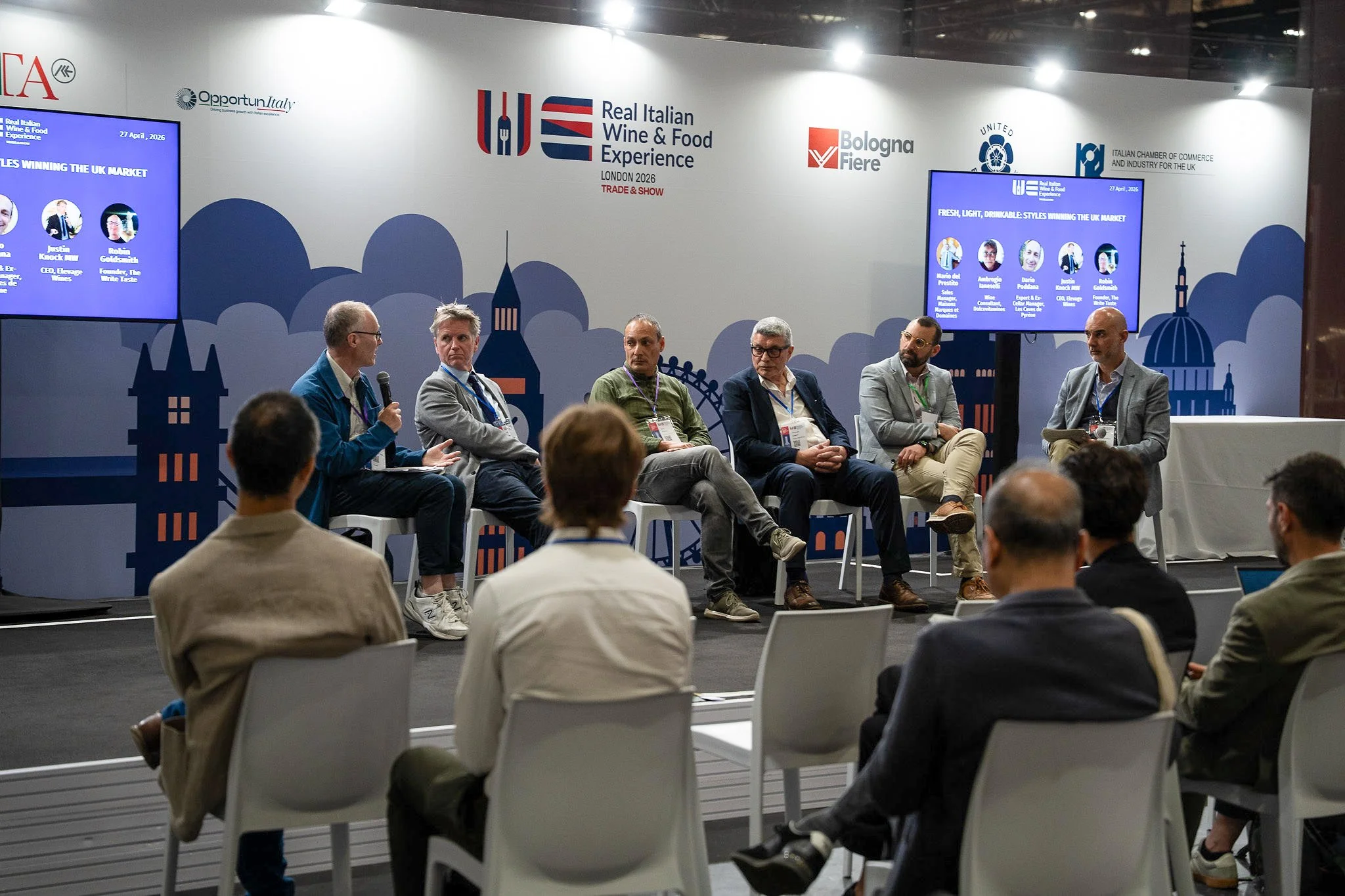
Programming
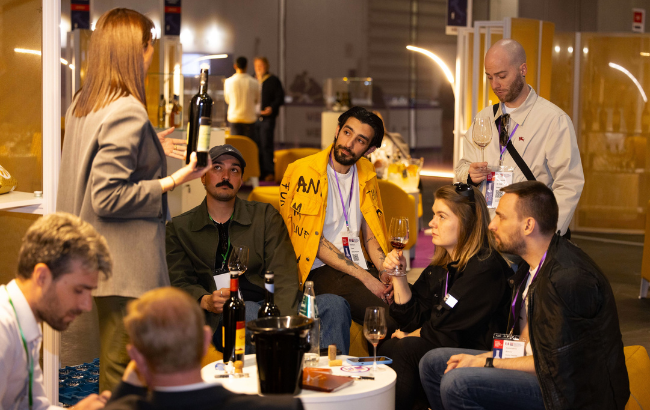
Lounges
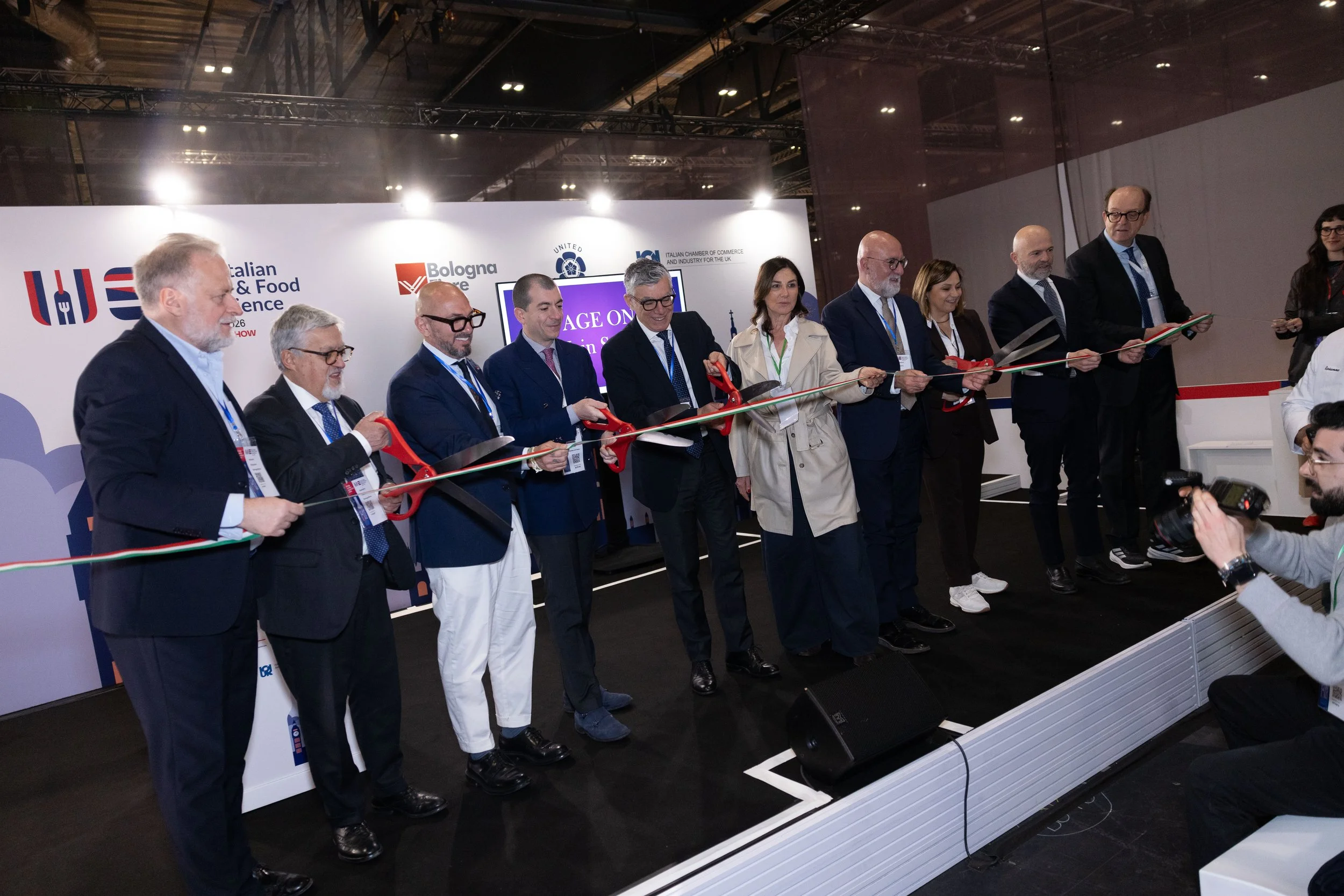
Institutions
What people are saying
-
![DecanterArticle]()
Northern Italy's White Wines: DWWA masterclass at Wines Experience London 2026
DECANTER
Decanter World Wine Awards recently hosted a masterclass at the launch of Wines Experience London (Real Italian Wine & Food Experience), showcasing six Northern Italian white wines awarded medals in the competition's 2025 edition. -
![theBuyerArticle]()
Celebrating Italy at breakthrough Real Italian Wine & Food Experience
THE BUYER
With so many food styles, wine regions and grape varieties it was always going to be an ambitious attempt to bring all that together in a two day trade show, but the Real Italian Wine & Food Experience (Wines Experience London) proved to be exactly that for all the producers, importers and buyers who came together at London’s ExCel last month. Lilla O’Connor, who took part in the event herself, reports back for The Buyer from the second day of the show and picks out her own highlights from what was such a breakthrough event. -
![TheDrinksBusinessArticle]()
United Experiences debuts lounge-style wine fair in London
THE DRINKS BUSINESS
On 26-27 April, United Experiences hosted the inaugural Wines Experience in ExCeL, London, bringing together more than 200 Italian producers and 1,250 trade professionals to a lounge-style show.
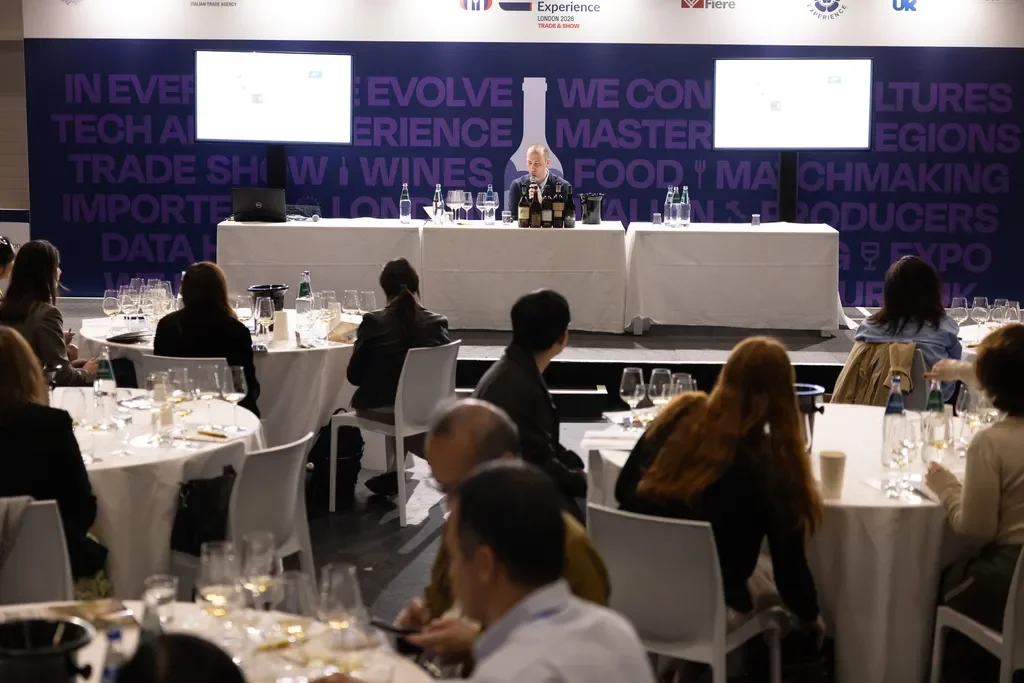
Exhibitors
Map

ITALIA DEL VINO
SLOW WINE FAIR
UMBRIA
SARDEGNA
EMILIA-ROMAGNA
SICILIA
CAMPANIA
CALABRIA
ITA
MMD WINE IMPORTERS
AREA K
Speakers
Programming
APRIL 25 - PREVIEW EVENTS
4:00 PM - 6:00 PM
An exclusive tasting event inviting engaged wine lovers and professionals to experience wines served blind while interacting directly with producers in an intimate setting designed to stimulate discovery and dialogue.
APRIL 26 - EXHIBITION DAY 1
11:00 AM - 12:30 PM
Official inauguration of Wines Experience London 2026 and formal opening of the exhibition floor.
This institutional moment marks the beginning of two days dedicated to strengthening the commercial, cultural and strategic relationship between Italian producers and the UK trade. The ceremony sets the tone of the event: positioning Italy not only as a heritage agrifood country, but as a contemporary, competitive and future-focused player in one of the world's most sophisticated markets. The ribbon cutting formally opens the exhibition and tasting halls.
12:30 PM - 1:30 PM
A guided tasting celebrating Sicilian culinary heritage through artisanal pasta and carefully selected regional ingredients. This vibrant experience brings together a curated selection of producers, showcasing how traditional recipes and artisanal techniques translate into products with strong contemporary appeal. From rich, sun-driven flavours to fresher Mediterranean profiles, the session explores textures, aromas, and the identity of Sicily’s gastronomy, while offering practical insights into positioning Sicilian food across retail and hospitality, with a focus on storytelling and cross-category opportunities.
A tasting-led analysis of adaptation already happening in vineyards worldwide. Each session connects climate science → viticulture → sensory outcome → commercial decisions.
Format: 60 mins moderated panel discussion + guided tasting + 15 min Q&A.
Audience: Importers, distributors, buyers, sommeliers, wine directors, independent retailers
12:00 PM - 1:15 PM
This session is part of the Dialogue in Motion series—an evolving format designed to move beyond traditional panels and into more dynamic, participatory conversations.
Centered on Italian sparkling wine, this discussion brings together next-generation voices from both the production and vineyard sides, offering a more complete view of how wines are shaped, communicated, and brought to market. Rather than a single, static conversation, participants will engage through a series of guided table rotations. Each round builds on the last, allowing ideas to develop in real time while creating space for direct exchange between speakers and attendees.
At the core of the session is a central question: Can sparkling act as a catalyst—for new audiences, new narratives, and new ways of thinking about Italian wine?
Through this lens, the conversation will explore:
How sparkling wines are currently perceived across key markets
The role of the next generation in redefining identity, communication, and strategy
The tension between tradition and evolution, including new styles and cultural approaches
The realities of vineyard work and how they connect to commercial decisions
The role of consorzi and NextGen networks in shaping collective direction
Where investment—across marketing, trade engagement, and pricing—has the greatest impact
By bringing together perspectives that are not always in direct dialogue, the session aims to create a more connected understanding of the category—from the vineyard to the final point of sale. The format is designed to be both personal and commercially relevant, encouraging honest discussion, shared insight, and a deeper connection to the people and decisions behind the wines.
2:00 PM - 3:00 PM | Jonathan Gebser - deputy curator, Slow Wine Guide
Sustainability has become one of the most frequently used terms in the wine world, yet it is often emptied of meaning or reduced to a simple communication tool. For those choosing a bottle—or working within the wine industry—it is not always easy to understand what sustainability truly means or which criteria define these practices.
It is precisely to address this need that the Slow Wine Fair has developed a producer selection approach based on concrete and verifiable criteria.
Wine is, first and foremost, an agricultural product—not simply a finished good to be tasted, but the result of a complex process involving soil, biodiversity, human labor, technological choices, and social responsibility. Understanding wine therefore requires shifting the focus from the glass to the vineyard, recognizing that what we perceive is a reflection of what happens in both the field and the cellar.
The reference framework is the Slow Food Manifesto for “good, clean and fair” wine—not a rigid set of rules, but a tool to guide understanding and develop a critical perspective on contemporary viticulture. Distinguishing between declared sustainability and real sustainability requires analytical tools that are not always readily accessible.
This is where the role of the wine professional becomes essential: not only to inform, but to act as a bridge between producers and consumers, making what would otherwise remain distant more accessible and understandable. Only through an active dialogue between producers, professionals, and consumers can a system be built in which “good, clean and fair” wine is not only produced, but also recognized, demanded, and valued.
The theoretical session will be complemented by a guided tasting of wines selected by the Slow Wine Fair, chosen to represent different concrete interpretations of the Manifesto's principles. To complete the experience, a small selection of high-quality, healthy, and sustainable baked goods curated by Sana Food will be offered alongside.
The objective is not simply to taste, but to learn how to read wine through the lens of its agricultural context
2:00 PM - 3:00 PM | Vincenzo Arnese - DWWA Judge, Wine Director
Italy is globally celebrated for its reds, yet many of its most compelling wines come from its white wine traditions, particularly across Northern Italy. Shaped by diverse landscapes, from mountain vineyards to lake and coastal influences, these wines reflect a wide range of terroirs, grape varieties and winemaking approaches.
From wines defined by clarity and immediacy to those built with structure and the capacity to evolve, the selection highlights how Northern Italy's white wines move beyond familiar perceptions, with some increasingly recognised within the fine wine conversation.
Through the perspective of Decanter World Wine Awards Judge and fine wine specialist, Vincenzo Arnese, this session explores how Northern Italy's white wines are increasingly recognised on the global stage. Featuring a tasting of six wines awarded at DWWA, the selection reflects the competition's rigorous judging process and highlights benchmark examples that are shaping the category today.
Wines on tasting:
1. Muzic, Valeris Friulano, Collio, Friuli-Venezia Giulia 2023 - Platinum, 97 points
2. Podere Selva Capuzza, Menasasso, Lugana Riserva, Lombardy, Italy 2020 - Gold, 95 points
3. Zýmē di Celestino Gaspari, From Black to White, Veneto 2022 - Gold, 95 points
4. Cantine Volpi, Derthona La Zerba Timorasso, Colli Tortonesi, Piedmont 2023 - Gold, 95 points
5. Les Crêtes, Cuvée Bois Chardonnay, Valle d'Aosta 2022 - Gold, 96 points
6. Cantina Terlano, Rarity, Alto Adige Terlano 2012 - Gold, 96 point
3:30 PM - 4:30 PM
An immersive tasting focused on one of Italy's most distinctive yet underexplored regions. Sardinia offers wines defined by sea influence, native varieties and natural freshness, key attributes for today's UK market.
The session provides a practical framework for positioning Sardinian wines, highlighting their gastronomic versatility, strong identity and potential for differentiation in both on-trade and retail environments.
4:00 PM - 5:00 PM | Roberto Costa - Founder, Macellaio RC and Luca Dusi - Founder, Passione Vino
A guided tasting with Roberto Costa and his head sommelier (Macellaio RC), exploring pairing through contrast and context. Each course moves from a classic match to an unexpected interpretation, evolving further with the addition of sauce or seasoning to reveal how subtle shifts can completely transform the wine in the glass, expanding the boundaries of what pairing can be.
Participants are invited to engage throughout, comparing wines, sharing observations, and experiencing how individual palate and perspective shape perception. Chefs and sommeliers are encouraged to attend together, reflecting the collaborative nature of pairing in practice.
APRIL 27 - EXHIIBITION DAY 2
10:00 AM - 11:00 AM
The Wine Market Shapers Award celebrates individuals, wineries and organisations that are actively shaping the future of Italian wine in the UK and international markets. The award recognises outstanding initiatives that combine innovation, cultural impact and market development, highlighting those who contribute to strengthening the visibility, quality perception and commercial success of Italian wine.
11:30 AM - 2:05 PM | Speed Conversations with Industry Leaders
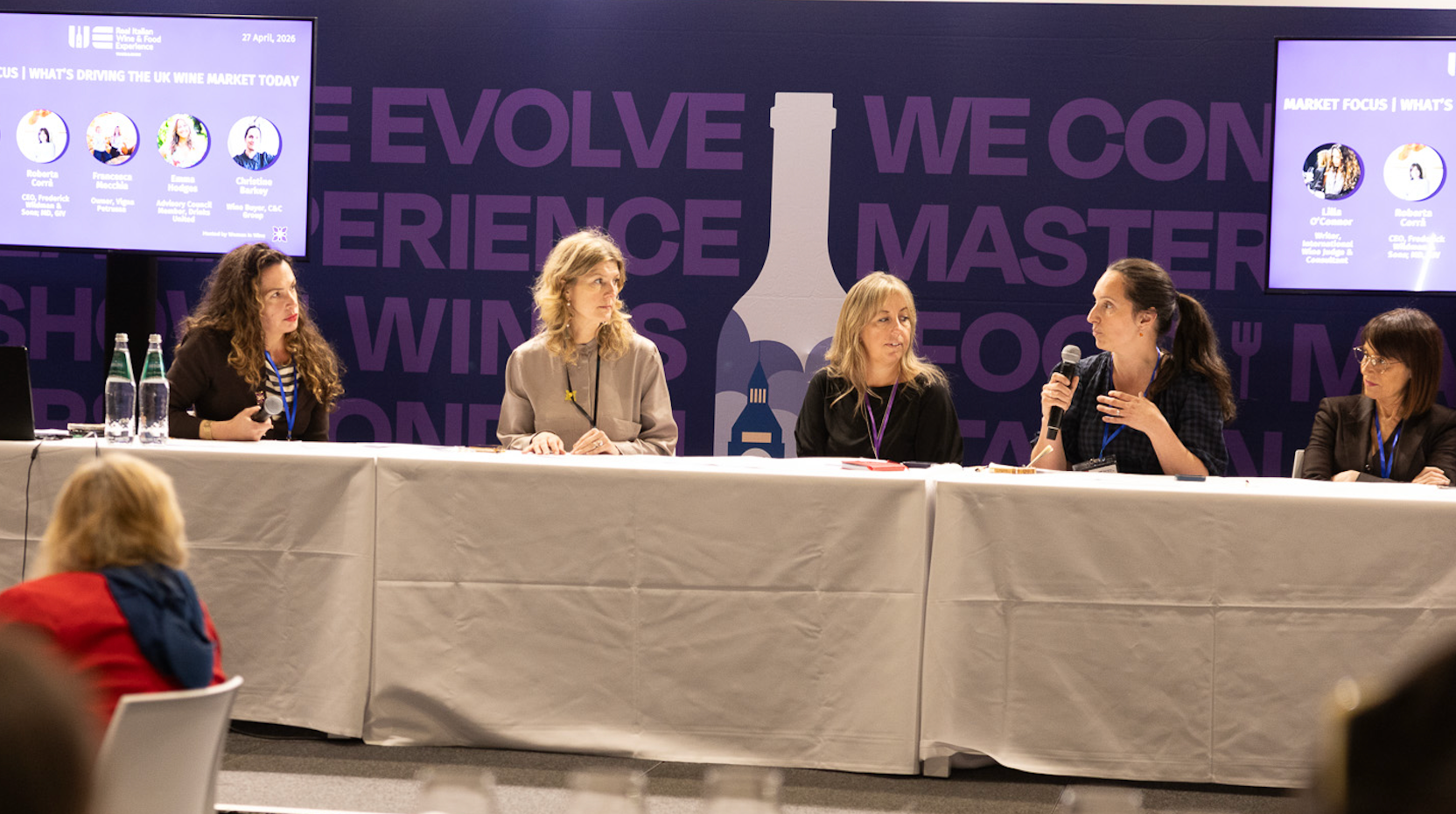
A dynamic sequence of short, high-impact conversations exploring the forces currently reshaping the UK wine market. Through a series of rapid 15/20 minutes Speed Conversations, leading importers, buyers and industry commentators address some of the most pressing questions facing the trade today: navigating cost pressure and margin compression, identifying the wine styles gaining traction with consumers, understanding the real commercial value of sustainability, and analysing how social media is transforming wine discovery and brand storytelling.
Each discussion is followed by 30-minute B2B networking breaks, allowing participants and attendees to continue the conversation directly on the exhibition floor and translate insights into real commercial connections. Designed for importers, distributors, buyers, sommeliers and wine professionals, Market Pulse offers a concise, practical snapshot of what is driving wine sales in the UK today — and where the market may be heading next.
11:30 AM - 12:30 PM
A guided panel tasting dedicated to the new generation of Calabrian wines, showcasing a curated selection from 11 wineries representing the region’s evolving identity.
The session explores the balance between tradition and innovation, highlighting the recovery of indigenous grape varieties, the role of young producers, and the growing focus on sustainability and contemporary winemaking approaches. Particular attention is given to the international positioning of Calabria, with insights into style evolution, market relevance, and opportunities within the UK trade.
01:00 PM - 02:00 PM
This masterclass is born from the meeting of two international events that share a common vision: the Slow Wine Fair in Bologna, dedicated to “good, clean and fair” wine, and Sana Food, a leading exhibition focused on healthy and sustainable food. Bringing them together in this context means offering an international audience a perspective on the relationship between wine, food, and conviviality, based on the belief that these themes speak a universal language.
The starting point is simple, yet often overlooked: there is no gastronomic memory that is not tied to a gesture, a table, or a human connection. And yet, over time, wine has gradually lost this original dimension, shifting from a convivial element to something perceived as technical and distant. Every culture has its own foods of memory and its own wines of sharing—this is precisely why the topic lends itself to an international dialogue.
Reclaiming this dimension also means rethinking certain contemporary consumption patterns, such as fragmentation and the growing prevalence of wine by the glass, which, while expanding choice, often interrupts the continuity of the experience. The shared bottle thus regains a central role—not just as a format, but as a convivial gesture. In the same way, “table wine” is reinterpreted not as a lesser category, but as an authentic expression of everyday wine: accessible, inclusive, and uniquely capable of creating relationships and memories.
With this vision in mind, the Slow Wine Fair has selected the wines featured in this masterclass: gastronomic wines that are not meant to stand alone as protagonists, but to accompany food and engage in dialogue with it. Rather than dominating, they support; rather than impressing, they enhance.
On the food side, Sana Food reflects a parallel and complementary philosophy: healthy and sustainable food is not a niche choice, but a cultural position on how we nourish ourselves and build communities. The products featured in this masterclass are selected in line with Sana Food's values: high-quality raw materials, transparent supply chains, and respect for local production traditions.
Food and wine pairing is not a set of rigid rules, but a dynamic process of constructing taste. It is a tool to observe how wine and food transform one another and how perceptions evolve throughout a meal. In this process, the sommelier is not merely a technical figure, but a cultural mediator—someone who creates a dialogue between wine, food, and people. This role is especially valuable for an international audience engaging with products and traditions that may be unfamiliar.
The theoretical part will be complemented by a guided tasting of wines selected by the Slow Wine Fair, paired with gastronomic products chosen according to the Sana Food philosophy. The goal is not to identify perfect pairings, but to understand how wine evolves in relation to food and how a harmonious experience is built.